Woolly Worm
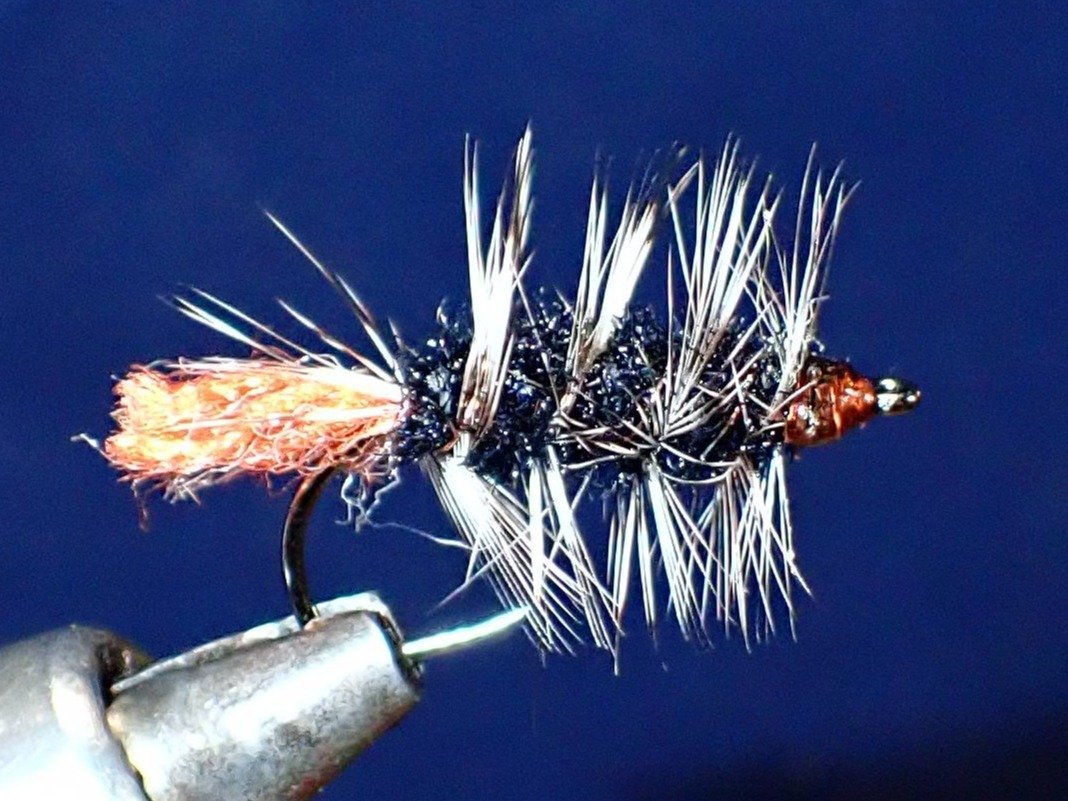
By Don Martinez, West Yellowstone, 1940s, submitted by Mike Cline.
Description
The Woolly Worm utilizes a palmered hackle along the entire hook shank which has been documented as early as the 1500’s during Napolean’s time. According to A.J. McClane (The Practical Fly Fisherman, 1975), Izaak Walton described the fly in “The Compleat Angler’ (1653) as a simulation of a caterpillar known as the Woolly Bear. One variation, the Palmer Fly, was shown on the cover of R. Brookes book, “The Art of Angling” (1770). The term “palmer” has British origins going back to 1823 when Alfred Ronalds wrote “The Fly Fishers Entomology“. The term “Palmer” comes from the Crusades, when European pilgrims traveled to the Holy Land and carried palm branches on the journey. These travelers were known as “Palmers”. British caterpillars also traveled a great distance prior to creating their cocoons and were also known as “palmers”. Ronalds noted this similarity of wrapping a hackle over the body to the caterpillars and referred the technique as a “palmer”, as did Brookes in 1779, and this term continues onto today. Sometime in the 1920’s, this pattern was introduced into the United States from England and was used as a Smallmouth Bass Fly in the Ozarks of Missouri and Arkansas. Don Martinez, a West Yellowstone Fly Shop owner from California, received this pattern from a friend in Arkansas sometime in the late 1930’s and created variations that he called “Woolly Worms”. Don Martinez is generally regarded as the individual who developed the modern-day Woolly Worm for trout fishing. In the 1940, he wrote to Preston Jennings notes on the pattern: “This horrible looking grub, Woolly Worm, is a made over bass and crappie fly. Properly fished it is murderous all season long. I made and sold as many of these things as all other flies combined last summer. I hate the looks of them and consider them more a lure than a fly, but they have had a boom for the two seasons last past with no sign of a let up. They should be used only in still or very slow water, fished deep, with a twitching of the line by the left hand. The movement of the hackle is what gets, em, suggesting perhaps the waving breathing apparatus of the may-fly nymphs and others.”
Materials
- Body: Chenille
- Hackle: Palmered Grizzly or Cree
- Tail: Short yarn or clipped marabou
- Thread: UTC 140
Hooks
- Firehole 811 #6-8
Target species: Trout