Fore and Aft Style — Fore and After
By Mike Cline.
Description
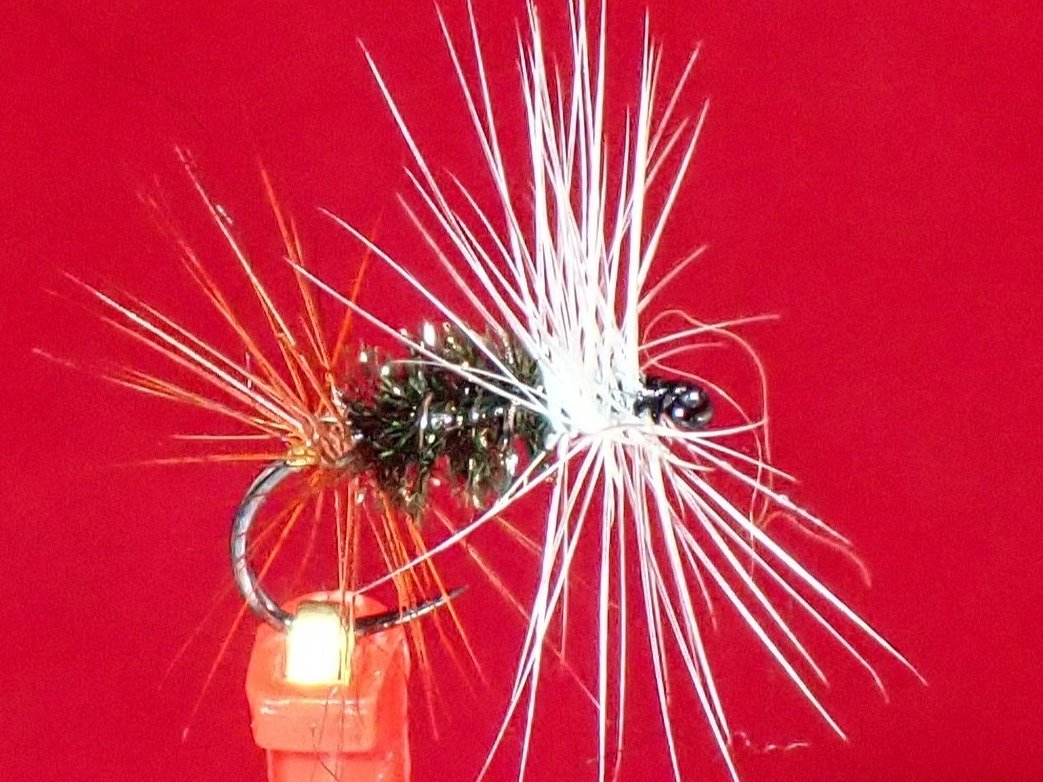
A fore and aft fly is a classic dry fly design with two hackles — one at the front (fore) and one at the back (aft) of the body — creating a high-floater that rolls on the surface and presents the hook in multiple positions. The pattern dates back to the early 1900s, with origins debated between French and English fly tyers. Doctor Juge is credited with creating a fore and aft in 1918, while Horace Brown developed similar designs in the 1930s. In the Southern Appalachians, the Golden Pheasant tippet tail became a trademark for many variations. The Wyoming Renegade is still a popular Western fly representing a variety of adult aquatic insects.
Tying Process
The addition of a second hackle at the hook bend (aft) to create a very buoyant fly can be adapted to many different dry fly patterns.
Materials
- Body: Appropriate to pattern
- Hackle: Appropriate to patten
- Tail: Appropriate to pattern
- Thread: Veevus 12/0
- Wing: Appropriate to pattern
Hooks
- Firehole 419 #16-12
Target species: Trout
Fly types: Dry Fly