Parachute Adams - Klink Style
By Mike Cline.
Description
The Parachute Adams does so well on it’s own that often it can be considered upon it’s own merits rather than just a variation of the original Adams fly designed by Leonard Halladay in 1922. One problem with the Adams is that it is difficult to see with the grizzly and brown hackles. The use of a parachute helps in sighting the fly but also in lowering its into the surface film. The Parachute technique is generally attributed to a young Scottish fly tier by the name of Helen Todd. She came up with the idea of wrapping horizontally after reading an American Fly Fishing Magazine that described tying the hackle “divided and spent”. A horizontal wrapping of the hackle would achieve the same effect. She used stiff pig bristles for the wing post. However, her employer Alexander Martin, designed a hook with a metal post to wrap the hackle horizontally and patented the hook in 1931. Martin owned a tackle shop in Glasgow that was established in 1778. The Klinkhammer was designed by the popular Dutch fly tier Hans Van Klinken in the 1980s. Originally it was developed to imitate an emerging caddis fly. The parachute hackle and post create a large footprint while leaving the abdomen and thorax suspended under the surface. Klinkhammers can be tied with various materials and colors.
Tying Process
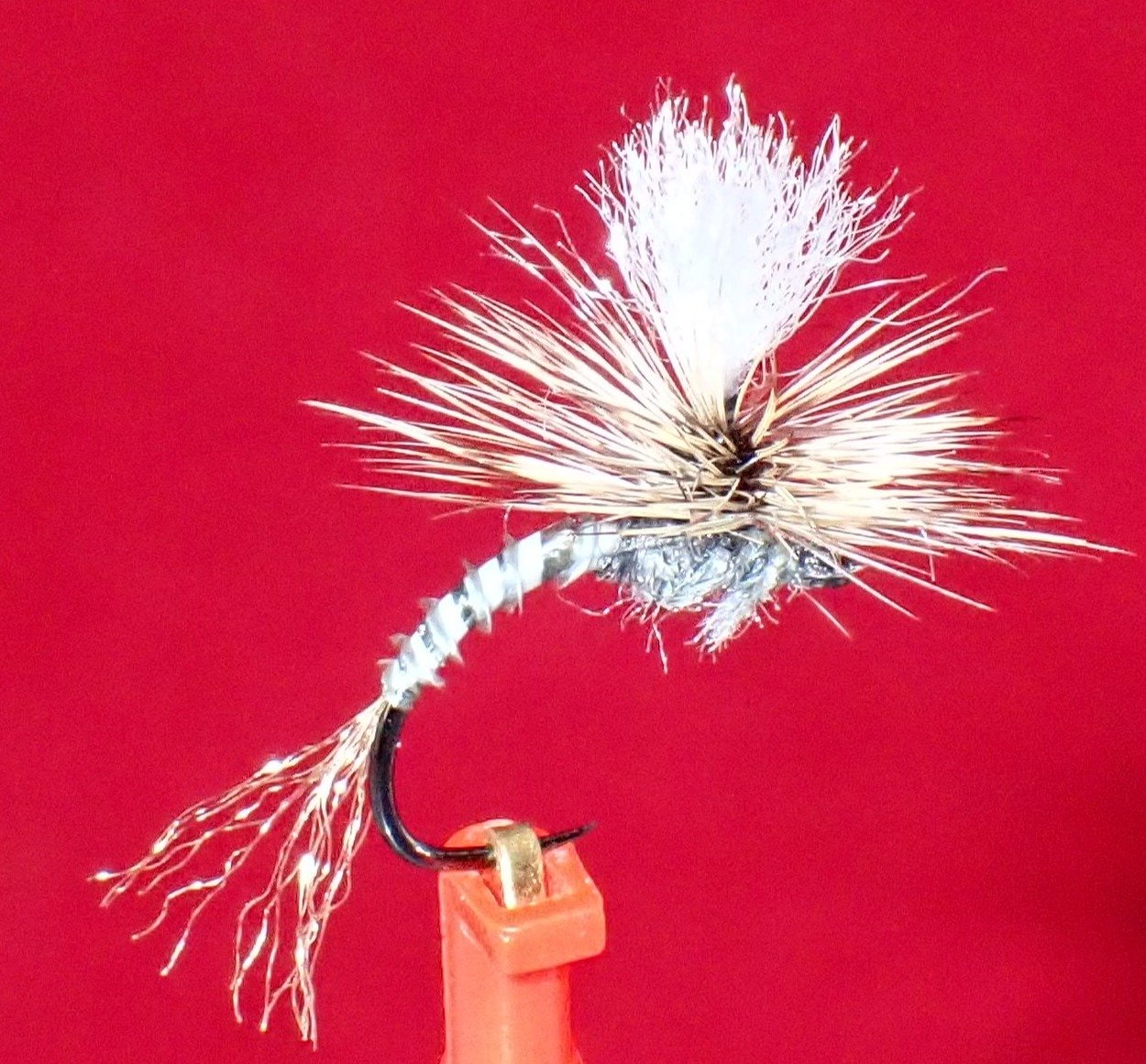
This is the basic Parachute Adams pattern tied Klinkhammer style with different materials for the abdomen.
Materials
- Abdomen: Gray dubbing or biot or quill
- Hackle: Brown and Grizzly or Cree
- Parachute Post: Frizz fiber Parachute Post
- Tail: Z-lon or Crystal flash tied as trailing shuck
- Thorax: Adams Gray dubbing
- Thread: Veevus 12/0 Gray
Hooks
- Firehole 413 #12
Target species: Trout
Fly types: Dry Fly, Emerger