Little Yellow Stone Fly adult — Yellow Sally
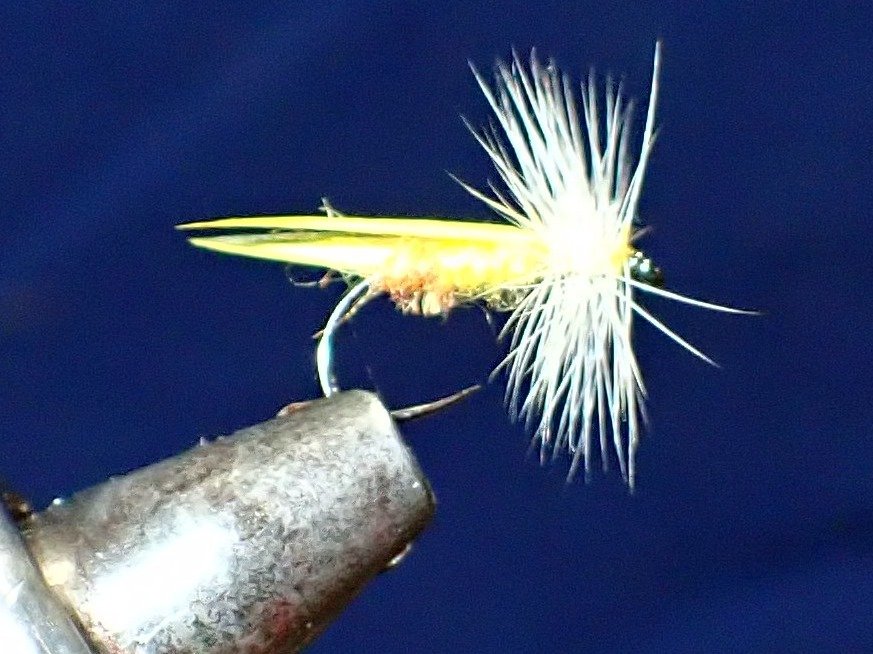
By Polly Rosborough, Jack Dennis, submitted by Mike Cline.
Description
The Yellow Sally (also known as a Little Yellow Stone fly) traces its roots to the late 19th-century British wet fly tradition, where small yellow stoneflies were imitated with soft-hackled wet patterns fished downstream and across, forming the genetic ancestors of modern emerger patterns. In the mid-20th century, American anglers adapted these patterns for Western freestone rivers, particularly to match the Isoperla hatches on rivers like the Snake, Madison, and Henry's Fork. Polly Rosborough and later Jack Dennis were instrumental in tying small yellow stonefly imitations specifically for these hatches. The classic hackled dry pattern—yellow body, light dun or grizzly hackle, and a single tail—remains largely unchanged from their early designs. Over time, other variations such as the Yellow Humpy and foam-based patterns emerged, but the core design owes its origin to these pioneering tiers. The fly was later adapted regionally, including in the Smoky Mountains, where anglers modified the pattern to match local stonefly species, resulting in variations like the North Carolina Hot Butt Yellow Sally. Modern fly tiers continue to refine the pattern, but the foundational design remains rooted in the work of Rosborough and Dennis, bridging British wet fly traditions with American dry fly innovation.
Materials
- Abdomen: Yellow dry fly dubbing
- Butt: Fly Rite Dark Orange Dry Fly Dubbing
- Hackle: Yellow or cream dry fly hackle
- Thread: Veevus 16/0 yellow
- Wing: Yellow turkey biots
Hooks
- Firehole 419 #14-16
Target species: Trout
Fly types: Dry Fly