Bucktail Humpy - The B-Side
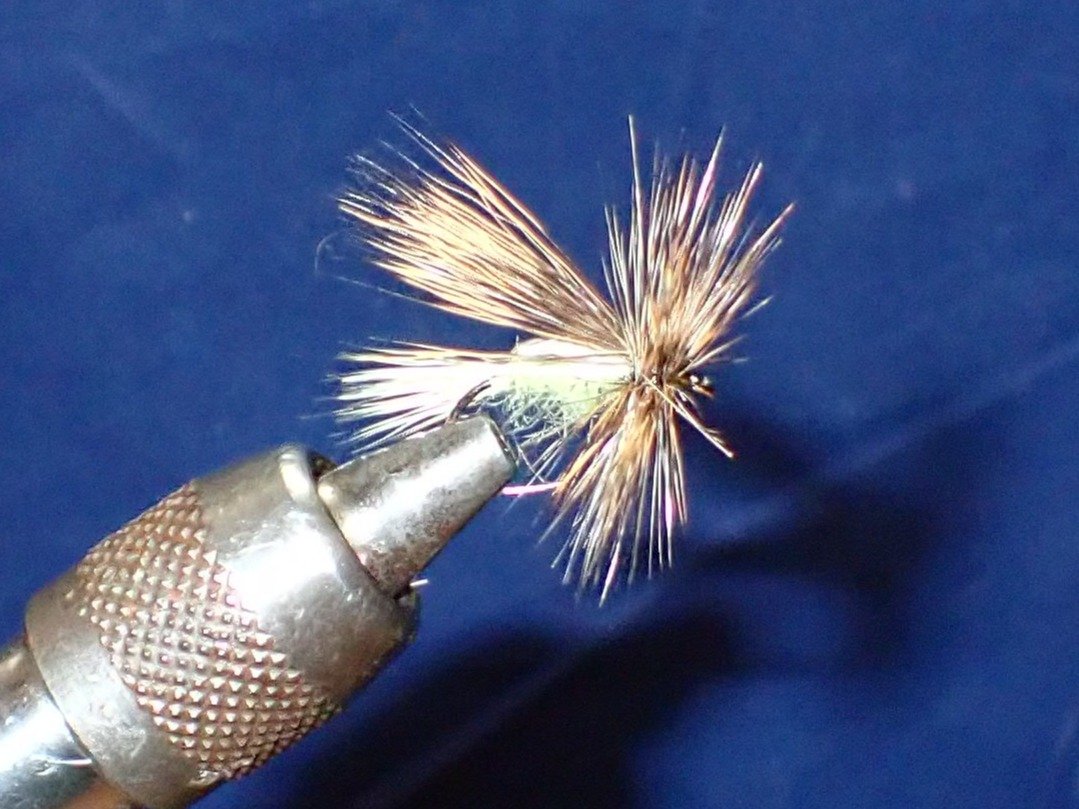
By Jack Horner, California, 1940s, submitted by Mike Cline.
Description
The Humpy fly was created in the early 1940s by California fly tyer Jack Horner. Horner developed it as the Horner Deer Hair fly while fishing California’s swift rivers, where buoyancy and visibility were essential for success in fast, turbulent water. The pattern was based on an earlier style called the Tom Thumb, a dry fly with two clumps of deer hair over a colored thread body, which had been tied in the U.S., Canada, and England as late as the 1940s. Horner adapted this into a more buoyant, hackled design that could float well in rough water. When the fly was introduced to Montana in the 1950s, it was initially called the Goofus Bug by fly shop owners there. Wyoming anglers later began calling it the Humpy, a name that stuck and is now widely used. Today, the Humpy is recognized as one of the most effective attractor dry flies for trout in fast-water conditions, valued for its high-riding profile, visibility, and ability to stay on the surface in broken water.
Tying Process
This version of the Humpy is tied with Bucktail, specifically from the base of the B-Side (back side) of a bucktail. The hair is hollow and floats well. Dyed tails will display a variety of color shades in this region of the tail.
Materials
- Abdomen: UTC 140 thread or dry fly dubbing
- Body: Bucktail from base of B-side
- Hackle: Dry fly hackle
- Thread: UTC 140
- Wing: Bucktail from base of B-side
Hooks
- Firehole 419 #12-10
Target species: Trout
Fly types: Dry Fly