Peeking Caddis — Peeping Caddis
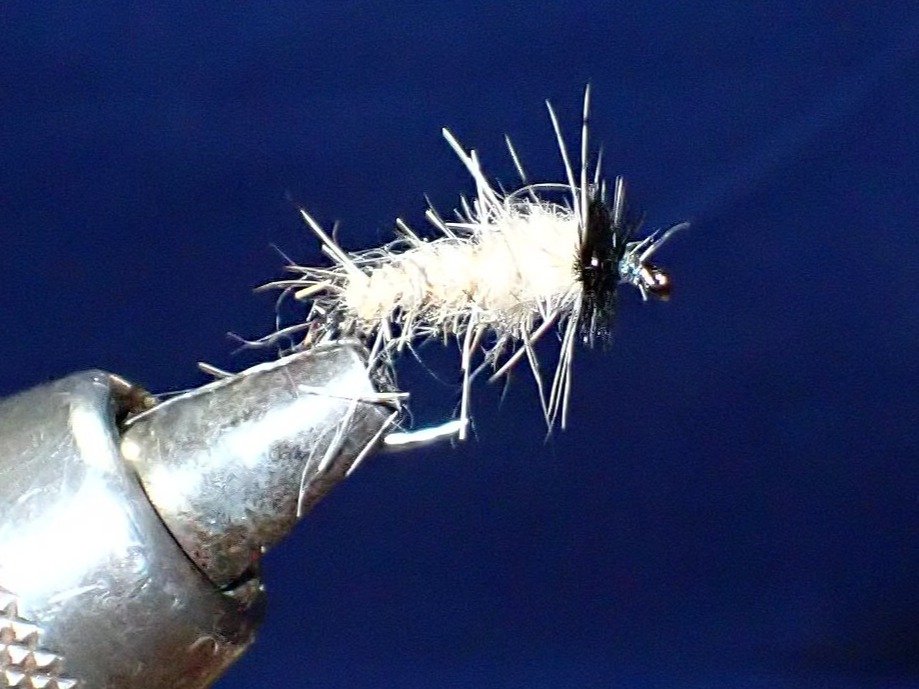
By George Anderson, Livingston, Montana , 1970s, submitted by Mike Cline.
Description
The Peeking Caddis fly pattern is most famously associated with George Anderson, who developed it in the 1970s while working at Anderson’s Yellowstone Angler Fly Shop in Livingston, Montana. Anderson created the pattern to imitate the Mother’s Day caddis (Brachycentrus), a species known for constructing a case from vegetation that tapers to a point. The fly’s bright green banding mimics the larva’s body “peeking” out of the case, and it is weighted to sink and tumble along the streambed, where trout often feed on these caddis RiverKeeper Flies. While some online sources also mention Hans Van Klinken as a developer of a similar pattern, the most widely recognized and historically documented version of the Peeking Caddis is George Anderson’s design, tied in the “beard” style with partridge fibers tied along the bottom of the fly to represent legs.
Tying Process
The name "Peeking Caddis" or "Peeping Caddis" is routinely interchangeable. The reverse tie version can be tied with various different color butts.
Materials
- Body: Hare's Ear dubbing or Pheasant Tail
- Butt: Charthreuse
- Collar: Black ostrich herl
- Thorax: White or Cream dubbing
- Thread: Utc 70 black
Hooks
- Firehole 609 #14-12
Target species: Trout
Fly types: Nymph