The Prince Nymph
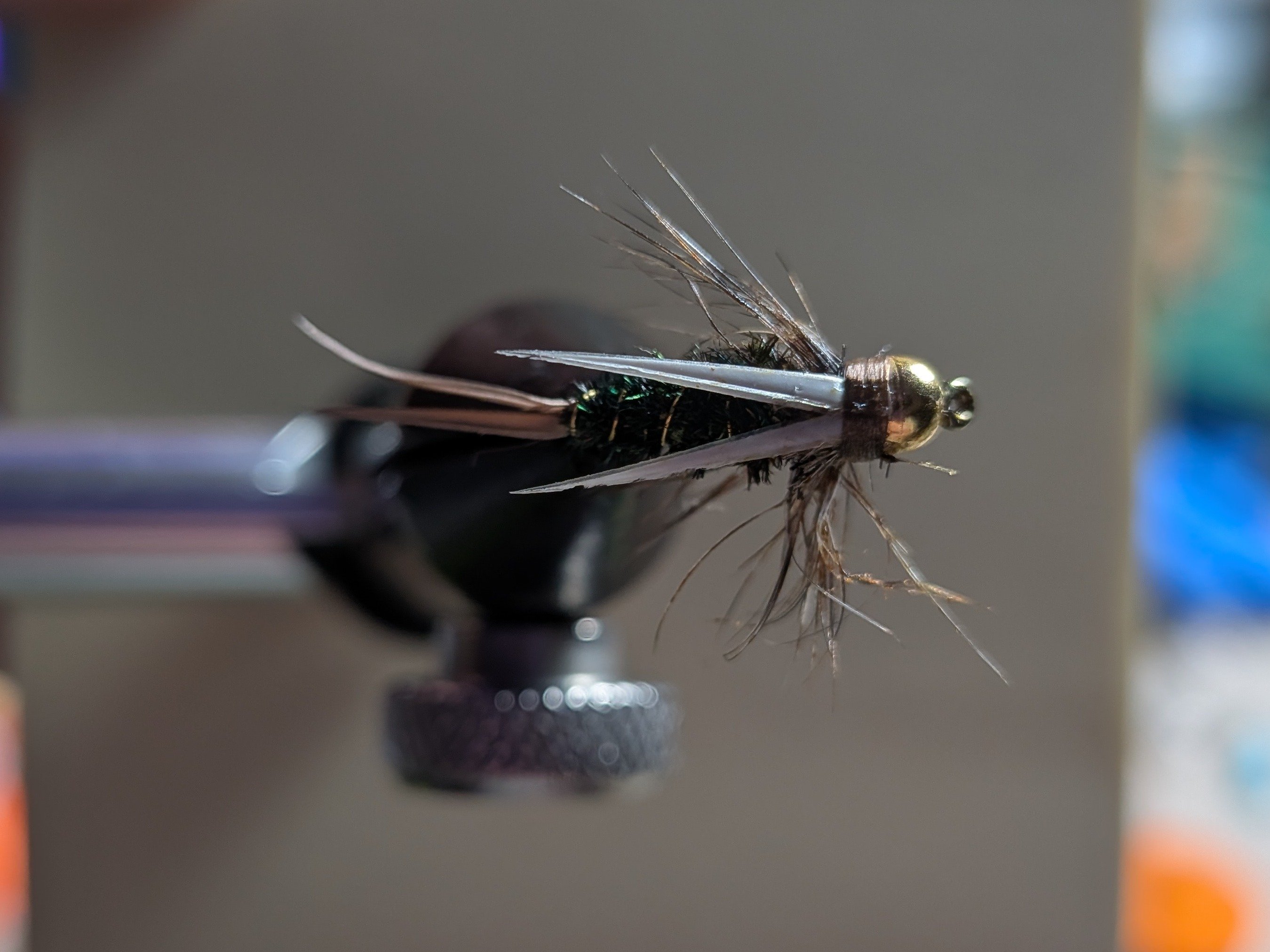
By Doug Prince, submitted by Ham.
Description
The Prince Nymph was developed by Doug Prince, an angler and fly tyer from Oakland/Monterey, California, in the late 1930s or early 1940s. Originally called the "Brown Forked Tail" or "Forked-tail Nymph," it was popularized when California fly shop owner Buz Buszek named it the Prince Nymph in his catalog.
Tying Process
Hook size 10-18 slide the bead onto the hook and secure 10–12 wraps of lead-free or lead wire behind it. Start your thread behind the wire wraps and build a thread base back to the bend of the hook. Tie in two brown goose biots for the tail, about one hook shank in length. Hold them firmly in place while securing them with thread wraps. Tie in a small gold wire at the base of the tail and advance your thread back up to the bead. Return your thread to the tail and tie in three strands of peacock herl. Wrap the peacock herl forward to the bead, leaving a small gap behind it, and secure. Counter-wrap the gold wire through the peacock herl body to reinforce it, then secure and trim the wire. Select a lower-quality dry fly hackle and strip a few fibers from the base of the stem. Tie the hackle in behind the bead and make 3–4 wraps to form a collar. Secure and trim the excess. Tie in one goose biot on each side of the bead at slight angles to form legs or antennae. Whip finish and apply head cement.
Materials
- Bead: Gold 7/64
- Body: Peacock Herl
- Hackle: Rooster dry fly hackle
- Horns: White goose biots
- Other: .015 lead free wire
- Other: .015 lead wire
- Ribbing: UTC small gold wire
- Tail: Brown goose biots
- Thread: UTC 70 brown
Hooks
- Tmc 5262
Target species: Bluegill, Rainbow Trout
Fly types: Bass/Warmwater, Jig, Nymph