Elk hair Caddis
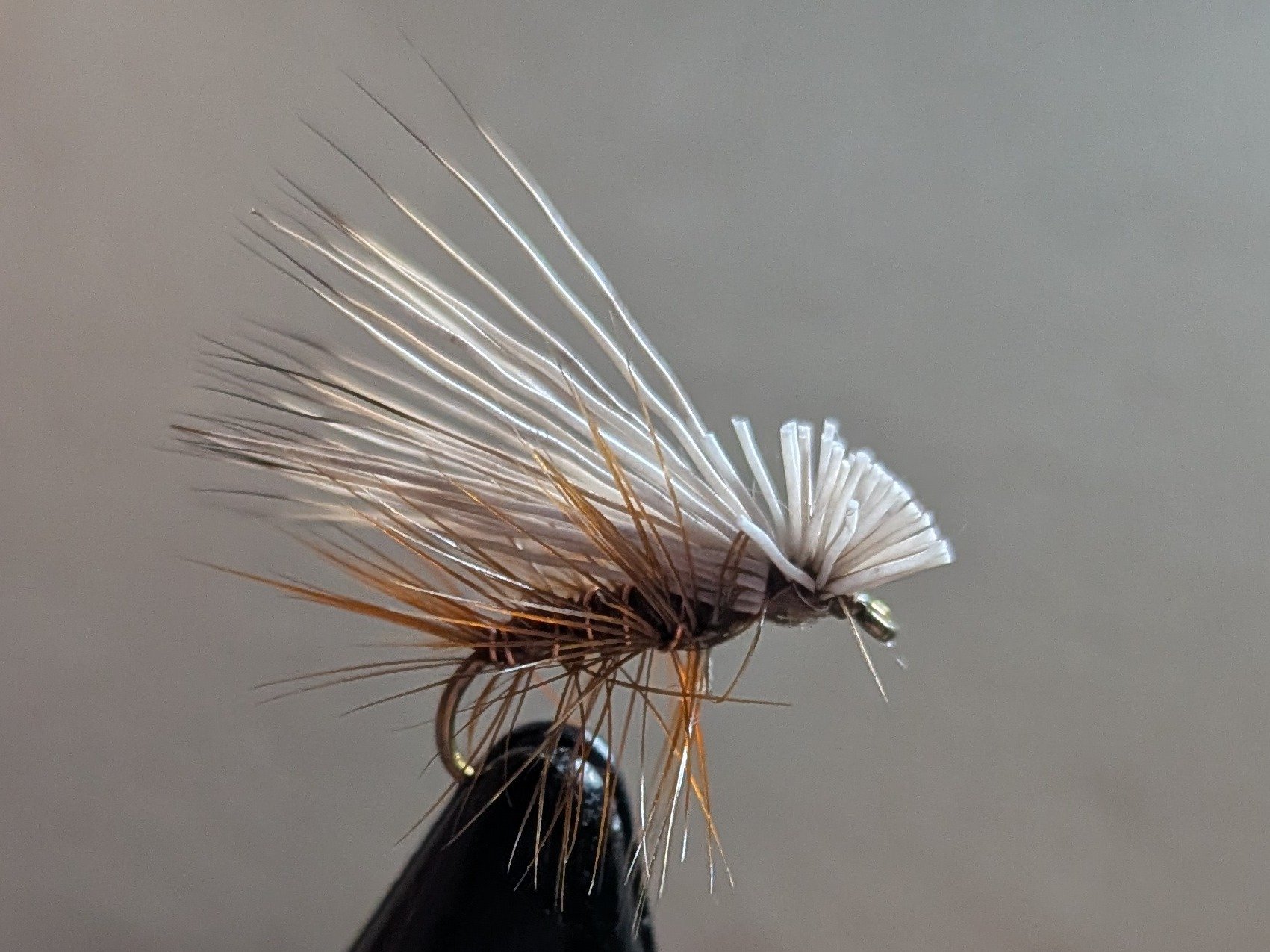
By Al troth, submitted by Ham.
Description
The Elk Hair Caddis is a highly effective, essential dry fly designed by Al Troth in 1957 to imitate adult caddisflies. It is renowned for its high-floating, durable design—featuring elk hair wings and palmered hackle—making it ideal for skating, twitching, or dead-drifting during caddis season (June–October). Common sizes range from 12 to 18, with colors like tan, olive, and brown being popular.
Tying Process
Hook size 12–18. Start the thread midway on the hook shank and build a thread base down the shank. Tie in a small wire of your choice at the beginning of the thread base and secure it down the hook shank. Create a dubbing noodle and wrap it forward, building a slight taper up the shank, ending where you started your thread. Then prepare your hackle by stripping the lower fibers above the webby fibers and tie it in. Wrap the hackle in open spirals backward to the end of the dubbing. Counter-wrap the hackle with the wire, weaving it through the fibers as you go, and secure the wire at the front of the hackle. Cut a clump of elk hair about two hook gaps thick. Remove the underfur and short fibers, then stack it well. Transfer it to your opposite hand and measure it to the back of the hook. Tie in the elk hair in front of the dubbing, making wraps until the hair stops twisting. Once it’s secure, split the elk hair butt ends in half and make two thread wraps, jumping in front of the elk hair. Whip finish to complete the fly, And cut the hair at an upward angle.
Materials
- Abdomen: Brown kapok dubbing
- Hackle: Brown rooster hackle
- Ribbing: UTC small copper wire
- Thread: UTC 70 brown
- Wing: Elk Hair
Hooks
- Tmc 100
Target species: Bluegill, Brook Trout, Brown Trout, Cutthroat Trout, Rainbow Trout
Fly types: Dry Fly